
01 Pages : 1-11
Abstrict
This research was conducted to find out whether the work environment, work training, work facilities, and work motivation directly determine the performance and to find out whether the work environment, work training, work facilities directly determine the work motivation carried out at the Office of Women's Empowerment, Child Protection, Batam Population, and Family Planning Control. The sample of this research are field workers of families (PLKB) who work in 12 districts. Seventy-six respondents received questionnaires and all duely returned. This research data is analysed through multiple regression analysis techniques using Smart PLS software. The indirect determination results indicate that the variable work environment, work training, and work facilities on performance mediated by work motivation have a significant effect <0.05. R Square determination coefficient of the work environment, work training, work facilities and work motivation on PLKB performance of 0.802 and work environment
Keywords
Work Environment, Training, Work Facilities, Work Motivation, Performance.
Introduction
In a global era, full of challenges and quite fierce, competition can not be separated from competency-based human resource management where human resources are required to continue to develop and have a strong ability to respond to global challenges. Human resources in an organization must have the competencies needed to stay alive and develop so that the implementation of human resource management from recruitment must be oriented to the competency model, which will have a positive impact on performance. High employee performance is one of the requirements in achieving company goals. The achievement of company goals is obtained from the company's efforts to manage potential human resources to improve its work. Human resource management by an organization is reflected in the performance of employees produced and from the achievement of organizational goals. The performance of an organization is primarily determined by the performance of each individual. In organizational performance, the achievement of results lies at the level or unit of the organization. It includes all elements in the organization, one of which is individuals(s).
Facing the environment that is currently developing very rapidly along with the era of globalization, the government needs to be in a condition that is always superior to other organizations. That is, the government can realize a significant change by working innovatively and proactively as we know that the apparatus as part of the government bureaucracy is the spearhead in both public services and development. To be able to see whether the government can make it happen if the work environment within the organization provides a comfortable atmosphere. If it will not hurt employee performance. The statement stated that a pleasant work environment would encourage employee morale.
On the other hand, measurement of success goes hand in hand with employees’ training. Education and training conducted is a significant effort that must be done by an organization, because both of these are always used by companies to be able to retain and maintain employees in a company and improve employee skills for improving performance. Also, it is intended that both new and old employees can do every job as well as possible, even though employees are faced with new jobs because both of these are always used by companies to be able to retain and maintain employees in a company and increase employee skills for the sake of improving performance.
This study's work targets are family planning field staff in Batam City, where the main task of PLKB is to conduct national family planning counseling and family planning services (based on Kepmenpan Number, 120 of 2004 Article 3 and Article 4). Entering a new era of KB implementation development, there are many demands for changes that must be made related to the implementation of family planning programs at the village / kelurahan level, both arising from changes in the vision and mission of the existing programs and demands for changes from implementing regional autonomy by the Law No.22 of 1990 concerning autonomy Family Planning Instructor (KB) is the spearhead of family planning managers in the field. When seen from the perspective of the Principal Duties and Functions (Auth) of their positions, KB counselors are illuminators or agents of change in families and the broader community towards mentality change from not supporting to supporting family planning programs, from those who did not care to care, from the past do not want to participate to be actively participating, and so on. KB counselors are also an essential component in efforts to improve the economy and welfare of the community, as well as indicators of progress that has been achieved by a region. KB counselors come into direct contact with the community in providing various family planning counseling programs. The current condition illustrates that the performance of KB field workers is still not optimal; it can be seen from the neglect of family planning counseling that also impacts the high IMR and MMR.
Formulation of the Problem
The formulation of the problem in this study are as follows:
Does the work environment determine the performance of KB fieldworkers in Batam City?
Does the training disseminate the performance of family planning field workers in Batam City?
Does the work facility disseminate the performance of KB fieldworkers in Batam City
Does work motivation demoralize the performance of KB fieldworkers in Batam City
Does the work environment demoralize the work motivation of KB fieldworkers in Batam City?
Does the training disseminate the work motivation of KB field workers in Batam City?
Does the work facility disseminate the work motivation of KB fieldworkers in Batam City
Theoretical Basis
Performance Theory
The term performance comes from the word job performance or actual performance (work performance or actual achievement achieved by someone), so performance is the result of quality and quantity of work achieved by an employee in carrying out their duties by the responsibilities given to him (Mangkunegara, 2016: 67). Performance is the result of a process that is referred to and measured over a certain period based on conditions or agreements that have been set previously (Edison, 2016: 190). In general, performance can be interpreted as the whole work process of individuals whose results can be used to determine whether the individual's work is good or vice versa (Roziqin, 2010: 41).
Nawawi in Widodo (2015: 131) performance is the result of a work that has been done, whether in the form of physical or material or non-physical or non-material. According to Simanjuntak in Widodo (2015: 131), performance is the level of achievement of specific tasks carried out. Simsequak also defines individual performance as the level of achievement or work of a person from the goals to be achieved or tasks that must be carried out within a specified period. According to Simamora in Putri (2013), performance refers to the level of achievement of the tasks that make up an employee's work. Meanwhile, according to Foster and Seeker in Widodo (2015: 131), performance is the result achieved by someone on the job by applicable measures.
According to Harsuko (2011), performance is the extent to which a person has played for him in carrying out organizational strategies, achieving specific goals related to individual roles, and showing competencies that are otherwise relevant to the organization. Performance is a multi-dimensional concept that includes three aspects, namely attitude, ability, and achievement.
Work Environment Theory
The work environment is anything that is around workers that can affect themselves in carrying out the tasks they carry. According to Siagian (2014: 56) stated that the work environment is an environment where employees do their daily work. Sedarmayanti (2013: 23) states that a place that has a group in which there are several supporting facilities to achieve company goals by the company's vision and mission.
According to (Nitisemito in Nuraini 2013: 97) work environment is everything that is around the employee and can affect the carrying out of the tasks assigned to him, such as air conditioning, adequate lighting, and so on. According to Robbins (2010), environments are institutions or forces outside, which have the potential to influence organizational performance; the environment is formulated into two, namely a global environment and a unique environment. The global environment is anything outside the organization that has the potential to influence the organization. This environment is in the form of social and technological conditions. While the unique environment is the part of the environment that is directly related to the achievement of the goals of an organization. Danang Sunyoto (2012:
Job Training Theory
Training is a systematic process of changing the behavior of employees in a direction to improve organizational goals. This training is essential because of the ways used to maintain, maintain, maintain employees and, at the same time, improve the skills of employees to be able to improve their performance (Ambar Teguh Sulistiyani and Rosidah, 2010, p. 23). Training is an environment forum for employees, where they acquire or learn attitudes, abilities and expertise, knowledge, and specific behaviors related to work (Mangkuprawira, 2011: 136)
According to Hanggraeni (2012: 97), "Training is education that helps workers carry out their current work." Sonny in Sinambela (2016: 169) "Education and training is one of the critical factors in developing human resources. Education and training not only increase knowledge but also improve work skills to increase work productivity. Training is the process of teaching new or existing employees the skills they need to carry out their work. Training is one of the efforts to improve the quality of human resources in the world of work. Employees, whether new or already employed, need to take part in the training. " (Gary Dessler, 2011: 263).
Work Facility Theory
Work facilities are a means or vehicle or tool to facilitate company activities and also for the welfare of employees so that employees can carry out their work well. So the work facility must be provided by the company, both facilities that are provided directly or supporting facilities for ease and comfort for employees in doing work (Ganda Sirait, 2013).
Work facilities are a form of service for agencies for employees to support performance in meeting employee needs, to increase employee productivity (Sri Wahyuni, 2014). According to Ovidiu (2013), simply what is meant by facilities is a physical facility that can process input to the desired output. Furthermore, Isnan (2017) defines that work facilities are all things that are used, used, occupied, and enjoyed by employees both in direct contact with work and for smooth work.
According to Moekijat (2010), simply what is meant by facilities is a physical facility that can process input to the desired output. Furthermore, according to Buchari Alma (2009), facilities are physical equipment to provide users with convenience so that the needs of these facilities can be met. According to Rista (2014), a facility is a provider of physical equipment to provide convenience to its users so that the needs of users of these facilities can be met. Added by Bary (2012: 67), work facilities are a means given by the company to support the company's tone in achieving the goals set by the control holder.
Work Motivation Theory
Chukwuma & Obiefuna (2014) Motivation is the process of arousing behavior, maintaining behavioral progress, and channeling specific action behavior. Thus, motives (needs, desires) encourage employees to act. Steers & Porter (in C 2010) states that work motivation is an effort that can lead to a behavior, direct behavior, and maintain or maintain behavior that is appropriate to the work environment in the organization. Motivation is an impulse both from others and from yourself to do a job with consciousness and enthusiasm to achieve specific targets (Mulyadi, 2015: 89). According to Vaithzal Rivai (2009: 837) (in Mulyadi, 2015:
Work motivation, according to Franco et al. (2004 in Harsuko 2011), is the degree of individuals' willingness to use and maintain efforts to achieve company goals. Motivation is a process related to psychology that affects the allocation of workers to owned resources to achieve these goals. Motivation is a need that drives action toward a goal (Kuswadi, 2004 in Harsuko 2011). According to Vroom in Alert (2011: 292), motivation is the result of a result achieved by someone, and the estimates concerned that his actions will lead to the desired results.
Thinking Framework

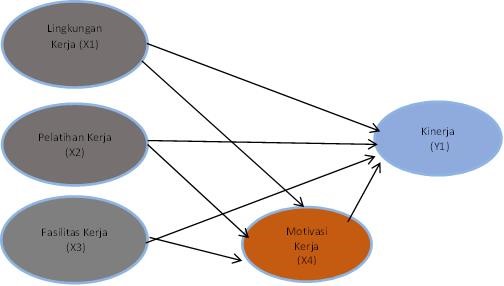
Figure 1. Research Models According to Researchers' Perceptions
Hypothesis
Work training demands the KB Field Worker Performance of the Women's Empowerment and Child Protection Office, Occupational Control, and Family Planning in Batam.
Work facilities dominate on the performance of KB field officers in the Office of Women's Empowerment and Child Protection, Occupational Control and Family Planning in Batam.
The motivation to demystify the performance of KB field officers in the Office of Women's Empowerment and Child Protection, Occupational Control and Family Planning in Batam City.
The work environment disseminates the work motivation of KB field officers in the Office of Women's Empowerment and Child Protection, Occupational Control, and Family Planning in Batam.
The job training disseminates the work motivation of KB field officers in the Office of Women's Empowerment and Child Protection, Occupational Control, and Family Planning in Batam.
The work facilities disseminate the work motivation of KB field officers in the Office of Women's Empowerment and Child Protection, Occupational Control and Family Planning in Batam.
Research Methods
Type of Research
This type of research uses a quantitative approach that is systematic scientific research on the parts and phenomena and see the extent of the relationships between variables.
Population
The population of this research is all family planning field officers in Batam City. PLKB is found in 12 districts and 64 villages, with a total of 76 used in this study taken as a whole. In other words, the total population is used as a sample (saturated sample) attached.
Sample
The number of samples in this study was as many as the population or called the saturated sample in which all populations were sampled totaling 76. The respondent was a family planning field officer (PLKB) who actively conducted the counseling process at the sub-district man kelurahan in Batam City.
Data Collection Technique
The data used in this study are primary data using survey methods, namely research methods in which researchers use information through the distribution of questionnaires to respondents who are subjects of the study.
Research Variable
This study has three exogenous variables, namely Work Environment (X1), Work training (X2) Work Facilities (X3), Work Motivation (X4) as intervening variables and Performance (Y) as endogenous variables. Operationally, these variables are described as follows:
Data Analysis Technique
Data analysis in this study used SEM with Partial Least Square (PLS). The use of SEM-PLS with consideration to develop or build theories, approaches based on variants, indicators can be formative and reflective and do not require error terms, models with large complexity, many constructs, and many indicators, small amounts of data and violations of multivariate normality assumptions, parameter estimation can be done without the requirements of the goodness of fit, and relatively does not face problems in the process of iteration of the model (Ghozali, 2012: 11). The structural equation model is presented as follows:
Table 1. Structural Equation Analysis Model
| No | Effect Variable | Variable Cause | Structural Equation |
| 1 | Work motivation (h1) | Work environment (x1) | h1 = g11*x1 + z1 |
| 2 | Work motivation (h1) | Work training (x2) | h1 = g21*x2 + z1 |
| 3 | Work motivation (h1) | Work Facilities (x3) | h1 = g31 *x3 + z1 |
| 4 | Performance (h2) | Work environment (x1) | h2 = g11*x1 + z1 |
| 5 | Performance (h2) | Work training (x2) | h2 = g21*x2 + z1 |
| 6 | Performance (h2) | Work Facilities (x3) | h2 = g31*x3 + z1 |
| 7 | Performance (h2) | Work motivation (h1) | h2 = g22*x1 + ?21h1+z2 |
Adapted from Ghozali (2017: 17)
Information:
x (csi) : exogenous variable
h (eta) : endogenous variable
z (zeta) : structural error
Decision making on acceptance or rejection of the hypothesis is done by comparing t-statistic values ??and t-table values. If t-statistics are smaller than t-table values, then H0 is accepted, if t-statistic values ??are higher than t-table values, then H0 is rejected, and Ha is accepted. The framework for this study found a structural model with several latent variables.
Results and Discussion
Results
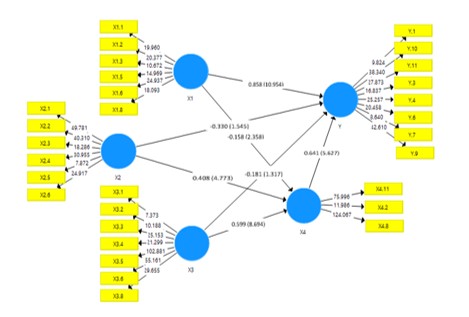
Figure 2. Full Model of Influence of Work Environment, Work Training, Work Facilities Towards PLKB Performance Through Work Motivation
Table 2. The Direct Influence Hypothesis
| Matrix | Original Sample | Sample mean | Standard Deviation | T Statistic | P Values |
| X1 -> X4 | -0.158 | -0,165 | 0.067 | 2,358 | 0.019 |
| X1 -> Y | 0885 | 0863 | 0.078 | 10,954 | 0,000 |
| X2 -> X4 | 0.408 | 0.413 | 0.086 | 4,773 | 0,000 |
| X2 -> Y | -0.330 | -0,350 | 0.213 | 1,545 | 0.123 |
| X3 -> X4 | 0.599 | 0.605 | 0.069 | 8,694 | 0,000 |
| X3 -> Y | -0.181 | -0.170 | 0.138 | 1,317 | 0.188 |
| X4 -> Y | 0.641 | 0.647 | 0.114 | 5,627 | 0,000 |
Source: PLS Data Processing (2020)
Table 3. The Indirect Effect Hypothesis
| Matrix | Original Sample | Sample Mean | Standard Deviation | T Statistic | P Values |
| X1 -> X4 -> Y | -0.101 | -0.105 | 0.043 | 2,360 | 0.019 |
| X2 -> X4 -> Y | 0.262 | 0.268 | 0.077 | 3,397 | 0.001 |
| X3 -> X4 -> Y | 0.384 | 0.390 | 0.073 | 5,235 | 0,000 |
Source: PLS Data Processing (2020)
Table 4. Total Effects
| Variable | Koefisen Value | Variable | Coefficient Value | |
| X1 -> X4 | 0.067 | |||
| X4 -> Y | 0.114 | |||
| Total Effect | 0.171 | X1 -> Y | 0.069 | |
| X2 -> X4 | 0.086 | |||
| X4 -> Y | 0.114 | |||
| Total Effect | 0.190 | X2 -> Y | 0.159 | |
| X3 -> X4 | 0.069 | |||
| X4 -> Y | 0.114 | |||
| Total Effect | 0.170 | X3 -> Y | 0.120 | |
Source: PLS data processing (2020)
Table 5. Coefficient of Determination
| Variable | R Square | Adjusted R Square |
| Work Motivation (X4) | 0.751 | 0740 |
| PLKB Performance (Y) | 0.802 | 0.791 |
Source: PLS Data Processing (2020)
Discussion
Direct Effect of Work Environment on Performance
The direct effect of the Work Environment variable on the PLKB Performance variable has a path coefficient of 10,954 having a positive direction, meaning that the better the work environment work, the higher the performance produced by the PLKB. Work Environment variables' influence on performance has a P-Values value of 0.019 <0.05, so it can be stated that there is a significant negative direct effect between Work Environment on Performance.
Direct Effect of Job Training on Performance
The direct effect of the variable Job Training on Performance has a path coefficient of 1.545 has a positive direction. The more frequent job training, the better the competency of a PLKB, and the impact on the resulting performance. The influence of Job Training variables on performance has a P-Values value of 0.123> 0.05, so it can be stated that there is no significant positive direct effect between Job Training on Performance.
Direct Effect of Work Facilities on Performance
The direct effect of Work Facilities on Performance variables has a path coefficient of 1,317 has a positive direction, meaning that the better the Work Facilities received by a PLKB in carrying out their duties in carrying out their work, the better the work produced. The effect of Work Facilities on Performance has a P-Values value of 0.188> 0.05, so it can be stated that there is no significant positive direct effect between Work Facilities on Performance.
Direct Effect of Work Motivation on Performance
The direct influence of Work Motivation variable on Performance variable has a path coefficient of 5.627, which has a positive direction, meaning that if the Work Motivation of PLKB is high in performing assigned tasks or jobs, the resulting performance will be high. The influence of Work Motivation variable on Performance variable has a P-Values value of 0,000 <0.05, so it can be stated that there is a significant positive direct effect between Work Motivation on Performance variable.
Direct Effect of Work Environment on Work Motivation
The direct influence of the Work Environment variable on Work Motivation variable has a path coefficient of 2.358 that has a positive direction, meaning that if the Work Environment is felt by a person supporting what is desired or a conducive work environment, then it can increase his motivation in carrying out his work. The influence of the Work Environment variable on Work Motivation has a P-Values value of 0.019 <0.05, so it can be stated that there is a significant positive direct effect on the Work Environment on Work Motivation.
The Direct Effect of Job Training on Work Motivation.
The direct effect of the Job Training variable on Work Motivation variable has a path coefficient of 4.773, which has a positive direction, meaning that the more frequently the Job Training is carried out, the higher the Work Motivation is the PLKB. The effect of Job Training variables on Work Motivation has a P-Values value of 0,000 <0.05, so it can be stated that there is a significant positive direct effect of Job Training on Work Motivation variables.
Direct Effect of Work Facilities on Work Motivation
The direct effect of Work Facility variables on Work Motivation has a path coefficient of 8.694 has a positive direction, meaning that Work Facilities that support a job will increase the value of the Work Motivation variable. The influence of Work Facilities on Work Motivation has a P-Values value of 0,000 <0.05, so it can be stated that there is a significant positive direct effect between Work Facilities on Work Motivation. Work facilities are based on a form of service for agencies for employees to support performance in meeting employee needs, to increase employee productivity.
Conclusion
The findings of data analysis in the discussion and testing of hypotheses can be concluded as follows:
The direct effect of the Work Environment variable on the Performance variable has a path coefficient of 10,954, has a positive direction, and the results of this study indicate there is a significant positive direct effect between the Work Environment on the Performance variable with a P-Values value of 0,000 <0.05.
The direct effect of the Work Training variable on the Performance variable has a path coefficient of 1.545 and a positive direction. The results of this study indicate there is no significant positive direct effect between the Work Environment on the Performance variable with a P-Values value of 0.123> 0.05.
The direct effect of the Work Facilities variable on the Performance variable has a path coefficient of 1,317 has a positive direction, and the results of this study indicate there is no positive direct effect between work facilities on the Performance variable with a P-Values value of 0.188> 0.05.
The direct effect of Work Motivation variables on Performance variables has a path coefficient of 5.627 has a positive direction, and the results of this study indicate there is a significant positive direct effect between Work Motivation on Performance variables with a P-Values value of 0,000 <0.05.
The direct effect of Work Environment variables on Work Motivation variable has a path coefficient of 2.358 has a positive direction, and the results of this study indicate there is a significant positive direct effect between Work Placement on Work Motivation variables with a P-Values value of 0.019 <0.05.
Work Training variables' direct effect on Work Motivation variables has a path coefficient of 4.773 and a positive direction. The results of this study indicate a significant positive direct effect between Work Training on Work Motivation variables with a P-Values value of 0,000 <0.05.
Work Facilities variables' direct effect on Work Motivation variables has a path coefficient of 8.694 has a positive direction, and the results of this study indicate a significant positive direct effect between Work Training on Work Motivation variables with a P-Values value of 0,000 <0.05.
The indirect effect of the Work Environment variable on Performance through Work Motivation has a path coefficient of 2,360 has a positive direction, and the results of this study indicate there is a positive and significant indirect effect of the Work Environment on Performance through Work Motivation with a P-Values value of 0.019 <0.05.
The indirect effect of Job Training variables on Performance through Work Motivation has a path coefficient of 3,397 has a positive direction, and the results of this study indicate a positive and significant indirect effect of Work Training on Performance through Work Motivation with a P-Values value of 0.001 <0.05.
Work Facilities' indirect effect on Performance through Work Motivation has a path coefficient of 5,235 and a positive direction. The results of this study indicate a positive and significant indirect effect of Work Facilities on Performance through Work Motivation with a P-Values value of 0,000 <0.05.
Coefficient of Determination that (R Square) Work Environment, Work Training, Work Facilities, and Work Motivation explain PLKB 80.2% Performance variable and the remaining 18.28% is influenced or explained by other factors. Furthermore, the Work Environment, Work Training, and Work Facilities explain the Work Motivation variable of 75.1%, and the remaining 24.9% is influenced or explained by other factors or variables not examined in this research model.
References
- Abner Naa. (2017). The Effect of Work Environment, Work Motivation, and Training on Employee Performance at the Bintuni District Office in Bintuni Bay Regency. Volume 2 No. 02 | August 2017, page: 167-17
- Ardana, I Komang., Ni Wayan Mujiati, and I Wayan Mudiartha Utama. 2012. Human Resources Management. Yogyakarta: Graha Science.
- Arifin. Z. (2012). New Educational Research Methods and Paradigms. PT Youth Rosdakarya. Bandung
- Azwar, Saifuddin. (2013). Research methods. Fourteenth Edition. Yogyakarta. Student Library
- Badriyah, Mila. (2017). Human Resource Management. Bandung: CV. Faithful Reader
- Busro, Muhammad. (2018). Theories of Human Resource Management. Jakarta. Prenadamedia Group
- Cholid and Achmadi. (2010). Research Methodology. Jakarta: PT. Earth Literacy
- Dessler, Gary. 2010. Management of Human Resources. Tenth Edition. West Jakarta. PT Index
- Emzir. (2012). Quantitative & Qualitative Education Research Methodology. PT Raja Grafindo. Jakarta
- Fajar, Siti, and Tri Heru Al. 2013. Human Resource Management. Second Edition. Yogyakarta. YKPN STIM UPP
- Hamali, Arif Y. (2018). Understanding of Human Resource Management, Managing Employee Strategies. Yogyakarta. Center for Academic Publishing Service
- Handoko, T. Hani. (2010). Personnel Management and Human Resources. Seventeenth Edition. Yogyakarta. BPFE
- Handoko, TH (2012). Personnel management and human resources. Yogyakarta, BPFE Press
- Hasibuan, Malayu. SP (2012). Human Resources Management, Revised Edition. Jakarta: Earth Literacy
- Hernidatiatin, LT, & Susijawati, N. (2017). Effect of Education Level On Employee Job Performance Through Work Motivation as an Intervening Variable. Journal of Business and Management Inspiration, 1 (1), 75-86
- Ishmael, Hj. Jealous. (2010). Human Resource Management. First edition. Poor. Publishing Institute of the Faculty of Agriculture Malang Brawijaya University Alfabeta.
- Isnan, Munawirsya. (2017). The effect of job satisfaction and work facilities on work motivation and its impact on non-media employees at the regional general hospital in Subulussalam. Volume 06, Number 01, 2017, 44-51
- Kaswan. (2011). Training and Development to Improve HR Performance. Bandung: Alfabeta.
- Mahmud. (2011). Educational Research Methods. Bandung: Cv. Faithful Reader
- Mangkunegara, Anwar P. (2017). HR Performance Evaluation. Bandung: Refika Aditama.
- Mangkunegara, Anwar Prabu. (2009). Corporate Human Resource Management. Ninth Edition. Bandung. PT Youth Rosdakarya.
- Marwansyah. 2012. Human Resource Management. Second edition. Bandung.
- Mulyasa E. (2012). School Based Management. PT Youth Rosdakarya. Bandung.
- Nela, Pima Rahmawanti (2014). The Influence of the Work Environment on Employee Performance (Study on Employees of the North Malang Pratama Tax Office). Vol. 8 No. March 2, 2014
- Priyatno, Duwi. (2011). SPSS Pocket Book. Statistical Analysis with Microsoft Excel & SPSS. Yogyakarta: Andi, Publisher.
- Purwono, Joko., Suryaningsih, Sri., Saptaria, Syati. (2012).
- Robbins, Stephen P. and Coulter, Mary. (2016). Management Volume 2, Issue 13. Jakarta: Erlangga. Rumengan, Jemmy (2020). Health Research Methodology. CV Sefa Bumi Persada.
- Rumengan, Jemmy, Rumengan, Eleonora (2019). Research Method. CV Sefa Bumi Persada
- Rumengan, Rumengan (2020). Research methodology. CV Sefa Bumi Persada.
- Samsudin, Sadili. (2009). Human Resource Management. Jakarta: Loyal Reader.
- Sanusi, Anwar. (2011). Business Research Methodology. Third Edition. Jakarta. Salemba Empat
- Sedarmayanti. (2009). Human Resources and Work Productivity. Third Matter. Bandung: CV Mandar Maju
- Siagian, Sondang. (2010). Human Resource Management. Eighth edition. Jakarta. PT Bumi Aksara
- Siagian, SP (2013). Human Resource Management. Jakarta: PT. Earth Literacy
- Sinambela, Lijan Poltak. (2012). Employee Performance. First edition. Yogyakarta. Graha Science
- Sugiyono. (2012). Combined Research Methods. Bandung: Alfabeta.
- Sugiyono. (2013). Educational Research Methods (Quantitative, Qualitative, and R&D Approaches). Bandung: Alfabeta
- Suhardi. (2018). Introduction to Management and Its Applications. Yogyakarta: Gava Media.
- Sule, Ernie T. and Saefullah, Kurniawan. (2017). Introduction to Management First Edition. Jakarta: Kencana
- Susilo, Leo J. and Kaho, Victor R. (2018). ISO 31000: 2018 Based Risk Management. Jakarta: Grasindo.
- Wibisono, Chabullah. 2015. Human Resource Management, As Spiritual Motivation. Medan: Prime Publishing.
Cite this article
-
APA : Hartati, S., Wibisono, C., & Indrayani. (2019). Determining Work Environment, Work Training and Work Facilities in Motivating Performance in Family Planning in the Women Empowerment Service, Children Protection, through Employment Motivation. Global Political Review, IV(II), 1-11. https://doi.org/10.31703/gpr.2019(IV-II).01
-
CHICAGO : Hartati, Sri, Chablullah Wibisono, and Indrayani. 2019. "Determining Work Environment, Work Training and Work Facilities in Motivating Performance in Family Planning in the Women Empowerment Service, Children Protection, through Employment Motivation." Global Political Review, IV (II): 1-11 doi: 10.31703/gpr.2019(IV-II).01
-
HARVARD : HARTATI, S., WIBISONO, C. & INDRAYANI. 2019. Determining Work Environment, Work Training and Work Facilities in Motivating Performance in Family Planning in the Women Empowerment Service, Children Protection, through Employment Motivation. Global Political Review, IV, 1-11.
-
MHRA : Hartati, Sri, Chablullah Wibisono, and Indrayani. 2019. "Determining Work Environment, Work Training and Work Facilities in Motivating Performance in Family Planning in the Women Empowerment Service, Children Protection, through Employment Motivation." Global Political Review, IV: 1-11
-
MLA : Hartati, Sri, Chablullah Wibisono, and Indrayani. "Determining Work Environment, Work Training and Work Facilities in Motivating Performance in Family Planning in the Women Empowerment Service, Children Protection, through Employment Motivation." Global Political Review, IV.II (2019): 1-11 Print.
-
OXFORD : Hartati, Sri, Wibisono, Chablullah, and Indrayani, (2019), "Determining Work Environment, Work Training and Work Facilities in Motivating Performance in Family Planning in the Women Empowerment Service, Children Protection, through Employment Motivation", Global Political Review, IV (II), 1-11
-
TURABIAN : Hartati, Sri, Chablullah Wibisono, and Indrayani. "Determining Work Environment, Work Training and Work Facilities in Motivating Performance in Family Planning in the Women Empowerment Service, Children Protection, through Employment Motivation." Global Political Review IV, no. II (2019): 1-11. https://doi.org/10.31703/gpr.2019(IV-II).01